

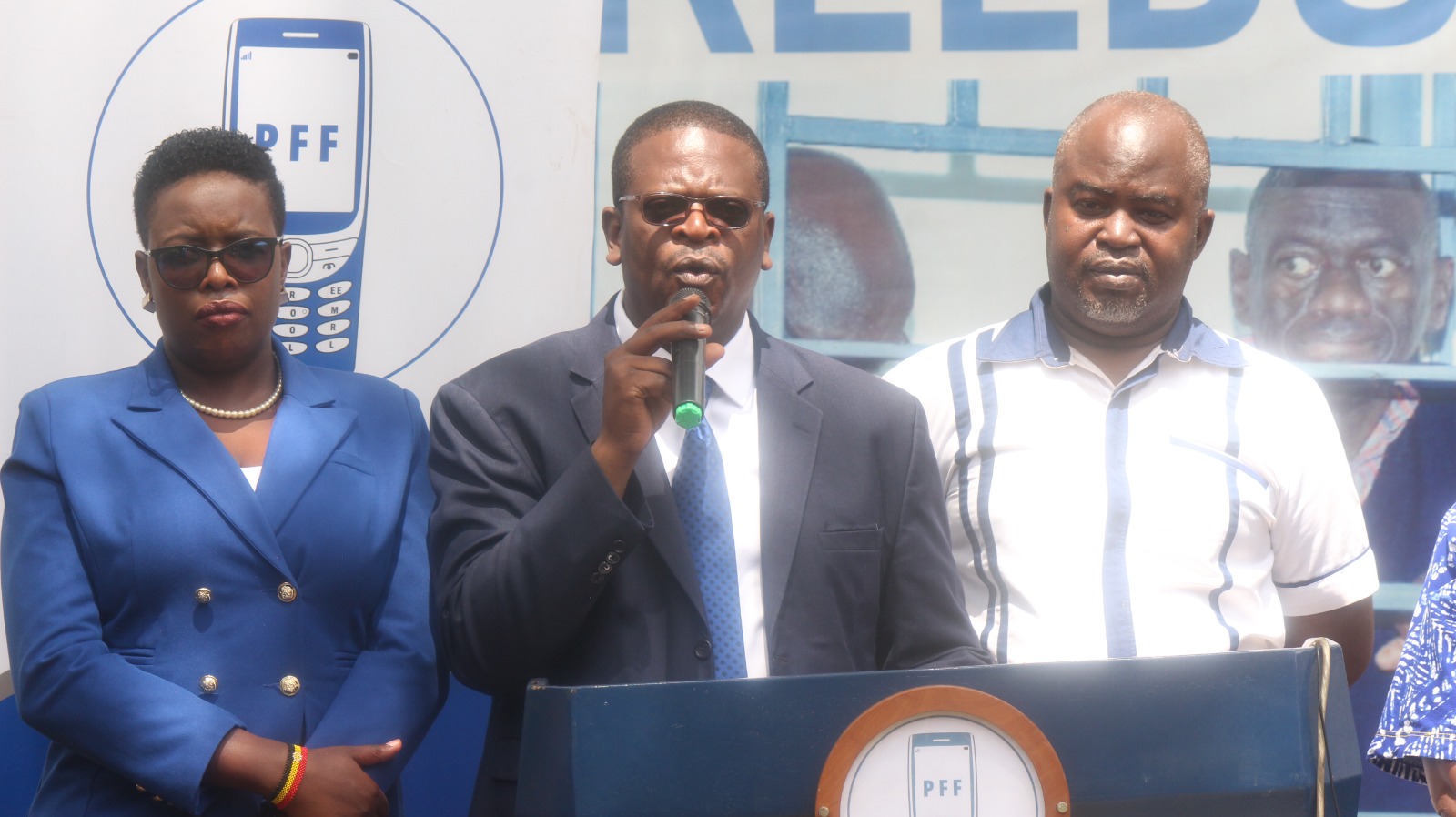
The Deputy President of the People’s Front for Freedom (PFF), Lulume Bayiga, has intensified criticism of the proposed Protection of Sovereignty Bill, 2026, framing it as a threat to pluralism and democratic freedoms in Uganda.
In a wide-ranging critique, Bayiga argued that the Bill goes beyond safeguarding national sovereignty and instead seeks to limit the exchange of ideas that underpin a functioning democracy.
Central to his argument is the distinction between “influence” and “interference”—concepts he says have been conflated in the justification of the legislation.
He explained that influence is a natural and often constructive part of political engagement, where actors shape opinions through dialogue, ideology, and persuasion, while interference implies coercion or disruption against the will of a state.
By invoking concerns about influence, Bayiga said President Yoweri Museveni is signaling unease with political competition itself.
“Political actors engage, exchange ideas, and even receive support based on shared values,” Bayiga noted, arguing that such interactions are foundational to multiparty democracy.
He warned that restricting such engagements risks isolating Uganda politically and weakening its democratic institutions.
Bayiga traced Uganda’s political evolution from the one-party Movement system introduced after 1986 to the eventual return to multiparty politics, noting that the transition was achieved through legal challenges, civic advocacy, and a national referendum.
He emphasized that ideology remains central to political organisation, shaping policy direction and offering citizens meaningful choices at the ballot box. Limiting parties’ ability to engage with like-minded global actors, he argued, undermines this diversity.
Bayiga also raised concerns about what he described as selective application of the Bill. While the President has publicly distanced religious institutions from scrutiny, he noted that political and cultural institutions appear to remain within its scope.
“This is about control,” he asserted, suggesting the legislation is intended to consolidate power by restricting alternative voices.
He further criticized the timing of the Bill, warning against passing far-reaching legislation through what he described as an “expiring Parliament,” arguing that it risks binding the country without adequate public debate or consensus.
Calling for collective resistance, Bayiga urged opposition legislators to reject the Bill, framing the decision as a defining moment for Uganda’s democratic trajectory.
